

Resources / Quick Tips
A wealth of information at your fingertips. Browse topics and download useful tips to keep and share with others.
Browse topics and download resources.
Click Download Resource to view and download an information sheet, or click Visit Page to go to a web page about it on this site.
Want to share our Quick Tips with others?
We can create personalized Quick Tips pages with your logo on them.
This Care Transitions Notebook will help you with the care of a loved one after a hospital stay.
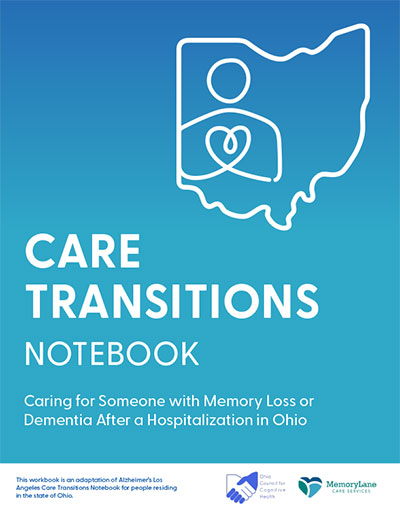
Care Transitions Notebook
Caring for Someone with Memory Loss or Dementia After a Hospitalization in Ohio
This workbook is an adaptation of Alzheimer’s Los Angeles Care Transitions Notebook for people residing in the state of Ohio.
Caring for a loved one with memory loss or dementia after a hospital stay can feel overwhelming. This notebook will help organize, guide and support you with easy-to-use information about what to expect, identify changes in health or behavior, and manage day-to-day needs such as medications, home safety, and follow-up appointments. It includes practical tips for handling common challenges related to dementia, as well as self-care ideas and support resources for the caregiver. We hope this notebook will become a trusted companion during the transition from hospital to home.
The Care Transitions Notebook is also a valuable tool for discharge planners, case managers, care navigators, social workers, nurses, and other hospital staff, as it offers a clear framework to guide conversations with families and support a smooth, well‑coordinated transition from hospital to home.
These tip sheets provide practical suggestions to help you care for someone with dementia.
Created by The Ohio Council for Cognitive Health.
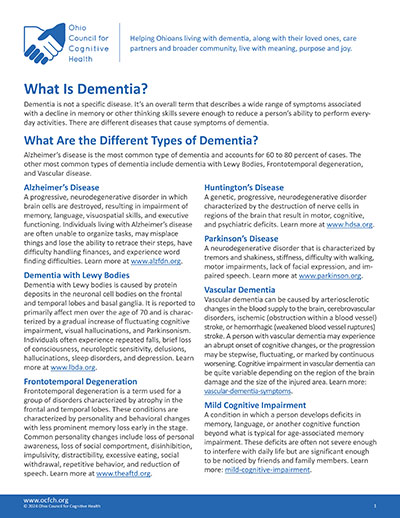
What Is Dementia?
Learn about the different types of dementia including Alzheimer’s disease, the difference between normal aging and signs of dementia, and how dementia is diagnosed.
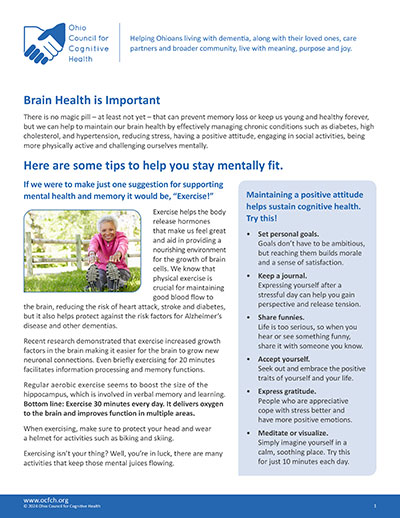
Brain Health
Learn tips to help maintain your brain health and improve memory. There are many easy everyday things you can do to prevent cognitive decline.
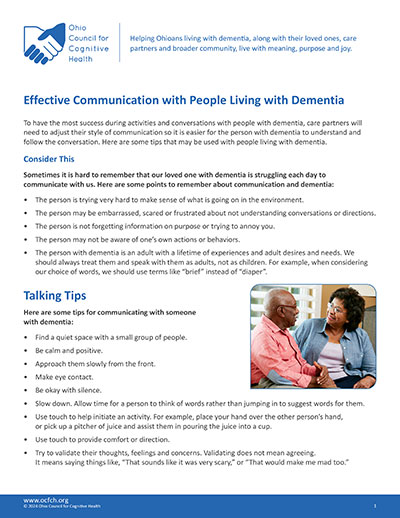
Communication Strategies
Learn to use a style of communication that is easier for the person with dementia to understand and follow conversations.
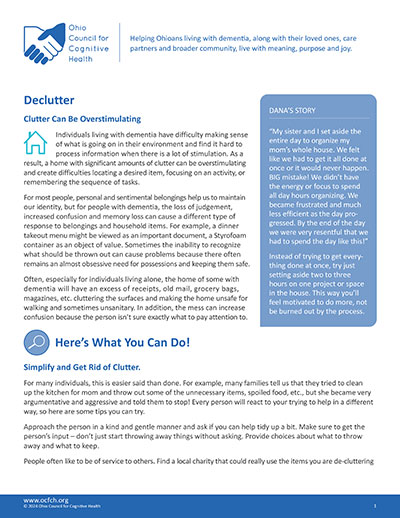
Declutter
Learn how to decrease clutter in the home while making the least disturbance to the person with dementia. This will help them to maintain focus and find items they need more easily.
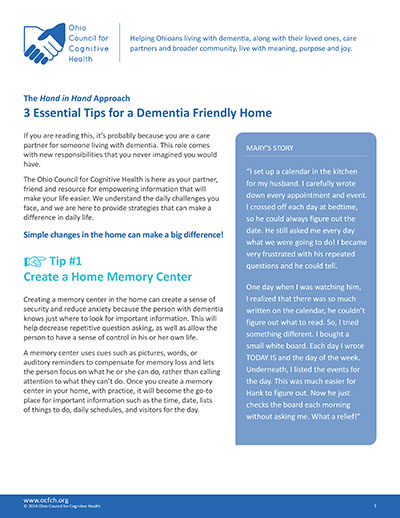
Dementia Friendly Home
Learn simple changes in the home that can make a big difference for you and the person with dementia. We share a wealth of ideas.
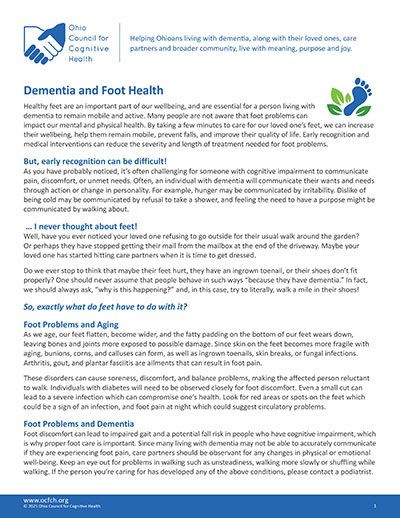
Foot Health and Dementia
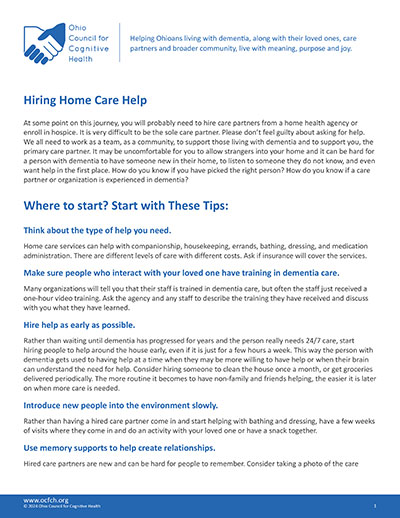
Hiring Home Care Help
Learn how to ease the transition to additional care partners. We provide important considerations and questions you can ask to help you find the right help.
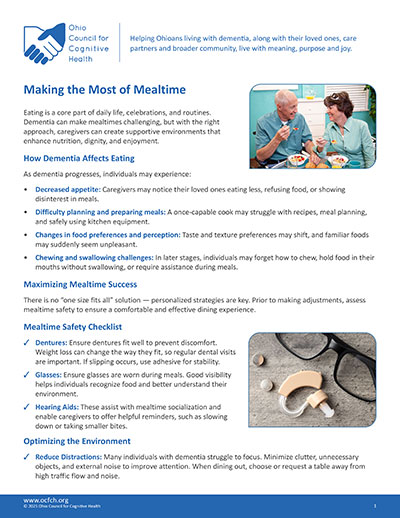
Mealtime
As dementia progresses, mealtimes can become challenging for all involved. Learn how to maximize your loved one’s mealtime for enjoyment and safety.
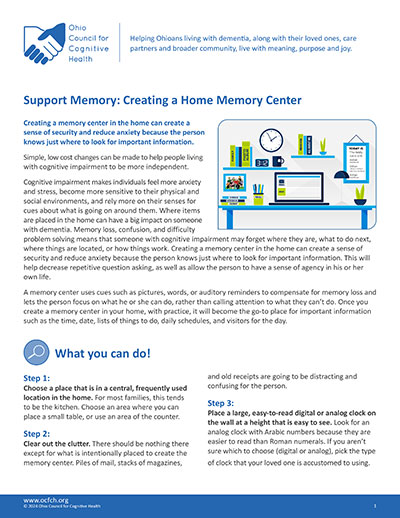
Supporting Memory

Memory Books
Learn how to make a memory aid that will improve communication with someone with dementia. Memory Books foster communication, and help people remember their identity.
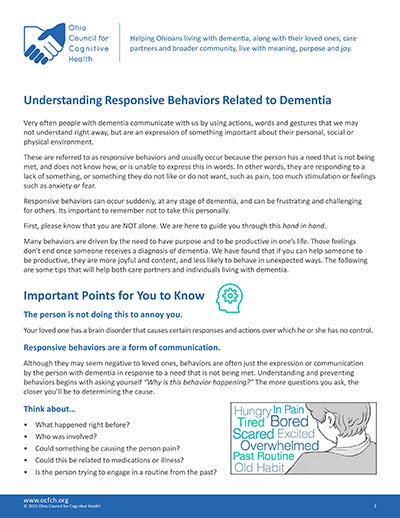
Responsive Behaviors
Make sense of unexpected behaviors and learn how to prevent them. Behaviors are often simply communication about an unmet need by the person with dementia.
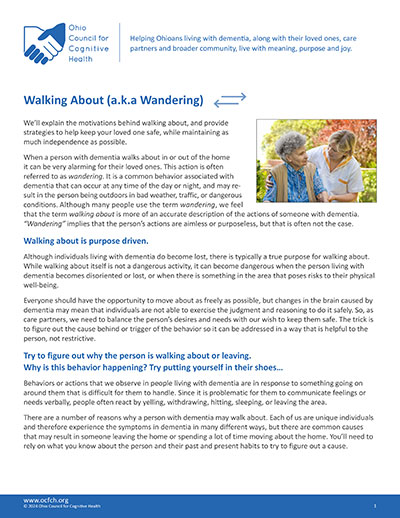
Walking About
Learn tips to help understand and prevent walking about. We provide strategies to keep your loved one safe, while being as independent as possible.
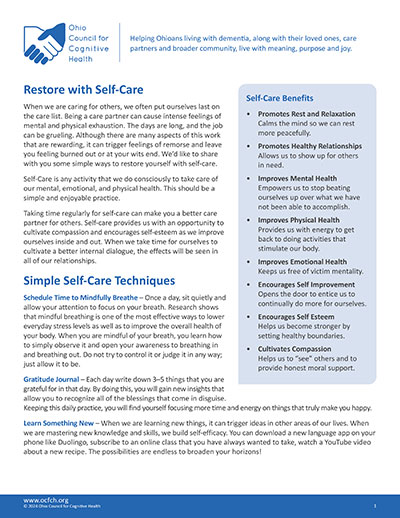
Self Care
When we are caring for others, we often put ourselves last on the care list. Learn some simple ways to restore yourself. Regular self-care can make you a better care partner for others.
Advanced Dementia
Hand in Hand Ohio
These tip sheets provide practical suggestions to help you care for someone with dementia.
Created and generously shared with permission by Alzheimer’s Greater Los Angeles.
Español : A Spanish version is on the 2nd page of each tip sheet.

IDEA! Strategy
An approach to help you figure out why a behavior is happening and what you can do about it.
Anger, Frustration, & Fighting
People with Alzheimer’s or dementia can get confused, depressed, and angry. Their feelings and actions are sometimes hard for them to control.
Anxiety
People with Alzheimer’s or dementia can have anxiety which can make them worry or feel nervous. It may cause other behaviors such as pacing or picking at clothing or hair.
Bathing
People with Alzheimer’s disease or dementia may be afraid of bathing or uneasy with having someone help them with bathing.
Communication
People with Alzheimer’s or dementia can lose their ability to speak clearly and understand what you are saying. This can be frustrating for the person with Alzheimer’s and for you.
Depression & Sadness
It is common for people living with Alzheimer’s or dementia to become sad or depressed. They may lose interest in the things they used to do, stop eating, have trouble sleeping, or sleep all the time.
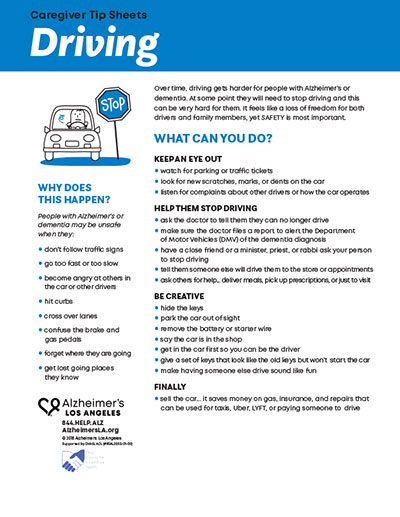
Driving
Over time, driving gets harder for people with Alzheimer’s or dementia. At some point they will need to stop driving and this can be very hard for them.
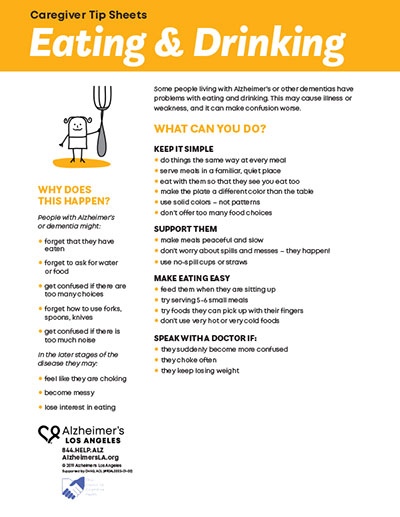
Eating & Drinking
Some people living with Alzheimer’s or other dementias have problems with eating and drinking. This may cause illness or weakness, and it can make confusion worse.
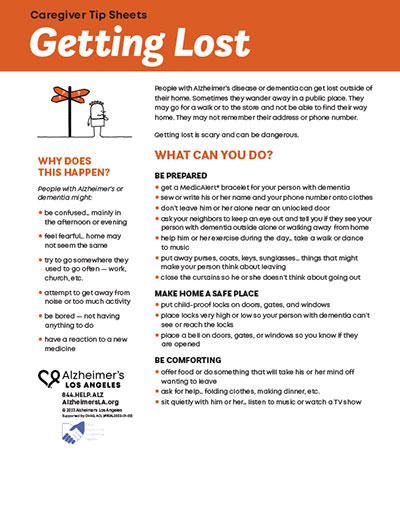
Getting Lost
People with Alzheimer’s disease or dementia can get lost outside of their home. Sometimes they wander away in a public place. They may not remember their address or phone number.
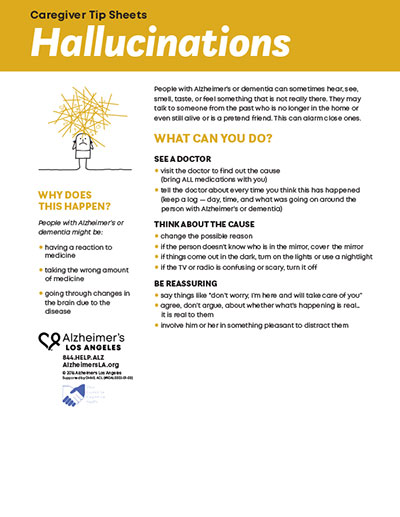
Hallucinations
People with Alzheimer’s or dementia can sometimes hear, see, smell, taste, or feel something that is not really there. They may talk to someone who is not there.
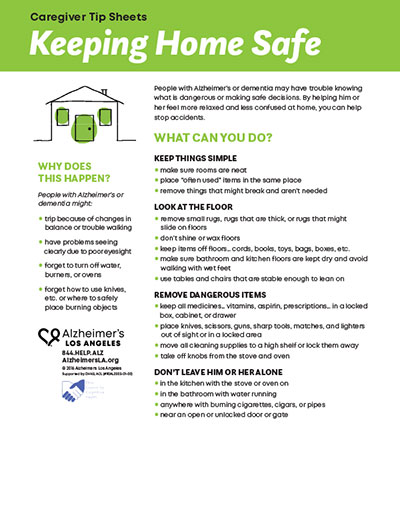
Keeping Home Safe
People with Alzheimer’s or dementia may have trouble knowing what is dangerous or making safe decisions. By helping them feel more relaxed and less confused, you can help stop accidents.
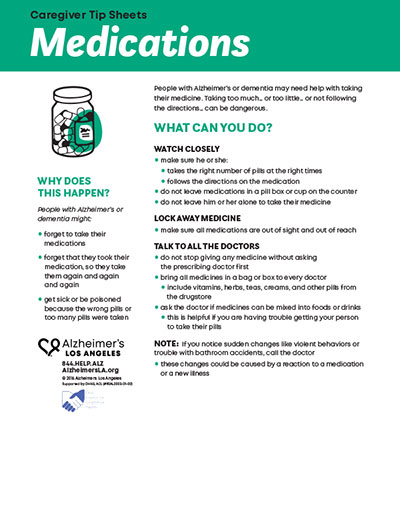
Medications
People with Alzheimer’s or dementia may need help with taking their medicine. Taking too much, too little, or not following the directions can be dangerous.
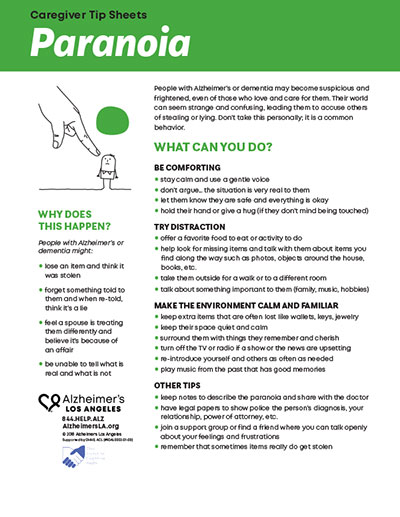
Paranoia
People with Alzheimer’s or dementia may become suspicious and frightened, even of those who love and care for them. Don’t take this personally; it is a common behavior.
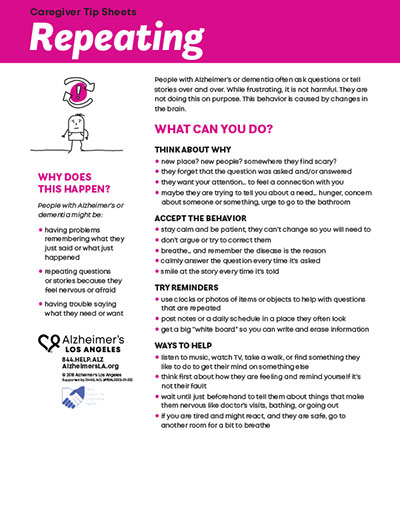
Repeating
People with Alzheimer’s or dementia often ask questions or tell stories over and over. While frustrating, it is not harmful. They are not doing this on purpose.
Resistance
Sometimes people with Alzheimer’s or dementia refuse to do common activities, like bathing, or going somewhere, like to the doctor’s office. This can be very frustrating to the caregiver.
Sleeping
Sleeping problems are common for people living with Alzheimer’s or other dementias. Many are restless at night and feel tired during the day. Poor sleep can also lead to other health problems.
Sundowning
People with Alzheimer’s or dementia may become more confused or nervous later in the day, often as the sun sets. This is called sundowning.
Toileting
People with Alzheimer’s disease or dementia can have accidents when they want to go to the bathroom.